
'The global climate system doesn't look at where the carbon dioxide is coming from. 'It may be emitted by the US, but it will not remain above the US alone but covers the whole world.'

Temperatures in 17 locations breached 45 degrees Celsius on Monday, with the punishing heat affecting health and livelihoods.

Jammu and Kashmir is facing a severe water crisis this year due to a massive rainfall deficit. Chief Minister Omar Abdullah has expressed concern about the situation and called for a proactive approach towards water management and conservation. The state has witnessed an 80% deficit in rainfall this year, raising the possibility of drought in the valley this summer. Several water bodies are flowing below the zero level mark, and some springs in south Kashmir have dried up completely. The water level in Jhelum and other major streams is alarmingly low.
Temperatures remained above 45 degrees Celsius in large parts of Rajasthan, Haryana, Delhi, Chandigarh and Uttar Pradesh, affecting daily life as many chose to remain indoors in the afternoon.

According to the latest data from the Ministry of Water Resources, the water storage position in major reservoirs has gone down to a record low of 34.86 billion cubic metres (bcm) -- about 22 per cent of the total storage capacity of 151.76 bcm of all the 81 reservoirs taken together. The storage level was above 26 per cent last year. Of the total 81 reservoirs in the country, 36 have significant hydro power potential with an installed capacity of more than 60 Mw each.

The city's 24-hour Air Quality Index, recorded at 4 pm every day, stood at 418, up from 334 the previous day, and it may trigger stringent restrictions under the third stage of the graded response action plan to mitigate hazardous conditions.

The IMD said that rainfall over India in August and September would be around 106 percent of the long-period average of 422.8 mm.

The searing heat pushed the city's peak power demand to its highest for May, while the Delhi government directed the schools that have not closed for summer vacations to do so with immediate effect.

The unrelenting heatwave sweeping large parts of the country has claimed at least 110 lives and left over 40,000 people grappling with suspected heatstroke between March 1 and June 18 this year, health ministry sources said on Thursday.

Intense heat swept through east India and parts of the southern peninsular region on Thursday, testing power grids and prompting the Kerala government to order closure of educational institutions till May 6.

India is set to experience extreme heat during the April to June period, with the central and western peninsular parts expected to face the worst impact, the IMD said on Monday as the country prepares for seven-phase general elections from April 19.

The heat wave is likely to impact parts of Jammu and Kashmir, Himachal Pradesh, Uttarakhand, Punjab, Haryana, Delhi, Rajasthan, Madhya Pradesh, Jharkhand, Odisha and Gangetic West Bengal, the Met office said.

Delhi's air quality deteriorated significantly on Monday, with areas like Dwarka, Mundka and Najafgarh recording an AQI of 500, the worst this season. The city's overall AQI reached 491, triggering the implementation of the Graded Response Action Plan (GRAP) Stage-IV restrictions in Delhi-NCR. Doctors warned of health risks, urging people to wear N95 masks and avoid outdoor activities. The Supreme Court questioned the Delhi government on its anti-pollution measures and warned against scaling down preventive measures without its permission. Delhi Chief Minister Atishi accused the BJP-led central government of political maneuvering while neglecting stubble burning in states it governs. Meanwhile, the city enforced stricter pollution control measures, including a ban on truck entry and suspension of construction activities. Air purifier sales surged, reflecting the public's concern over the severe air pollution.

The heat index in major metro cities in the country has majorly risen since 2010 compared to a decade earlier.

The minimum temperature in Delhi was recorded at 28.6 degrees Celsius, according to the India Meteorological Department (IMD).

The maximum temperature on Saturday settled at 18.1 degrees Celsius, two notches below the season's average, and the minimum was recorded at 3.6 degrees Celsius, four notches below the season's average, the IMD said.

'No approval was given to Sputnik V on Thursday. Some queries have been asked on safety, efficacy, and logistics, which the firm will have answers to at the next meeting'

A thick layer of fog was seen in several parts of the city, weather officials said.

Pollution levels in the Seine have raised health concerns for athletes participating in swimming events

Heatwave conditions are expected over northwest India during the next five days, with Punjab, Haryana, Rajasthan and Delhi predicted to bear the maximum impact, the India Meteorological Department (IMD) said on Thursday.

Notwithstanding the sweltering heat engulfing major cities, travellers can find solace in the steady airfares to popular summer destinations like Srinagar, Bagdogra, and Kochi. According to airline executives, capacity increases and moderate demand have kept spot airfares from scorching cities like Delhi on a par with the same period last year.

Hours after an Iranian military commander claimed to have located the crash site of the helicopter carrying Iranian President Ebrahim Raisi, conflicting reports emerged as the head of Iran's Red Crescent Society, Pir Hossein Koulivand, said that rescue teams are still searching the area for the accident site.

>Bihar (18 days) has the most number of heatwave days in 2023, followed by Andhra Pradesh (15 days), Odisha (15 days), Jharkhand (13 days), West Bengal (8 days) and Tamil Nadu (6 days).
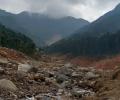
There is a definite attempt to put the landslides on the backburner because news of them and climate change worry Wayanad's tourism and real estate businesses greatly. Whatever I experienced of Wayanad's 2024 by-elections; the July landslides were not a burning issue, observes Shyam G Menon.

Epidemiologists worry there's little or no data being shared on mortality by age group and contacts traced, which makes it difficult to understand how the effects of Covid-19 might be different in the Indian population, reports Ruchika Chitravanshi

As weather patterns grow more unpredictable due to climate crisis, India is taking a giant leap with "Mission Mausam" to improve weather understanding and forecasting through expanded observation networks, better modeling and advanced tools like AI and machine learning.

Mumbai's recovery rate is nearly 15 per cent more than that of Maharashtra, which is 55.62 per cent.

Among the Sensex constituents, 18 stocks closed in negative with UltraTech Cement, L&T, Bharti Airtel, Bajaj Finance and Tech Mahindra being major laggards. Other heavyweights like Asian Paints, Maruti, Titan and JSW Steel also saw heavy selling. In contrast, Kotak Mahindra Bank, Bajaj Finserve, HDFC Bank, ITC and SBI bucked the trend and ended the session with a gain of up to 2.09 per cent.

India will launch its own composite index next year to quantify the impact of heat on its population and generate impact-based heat wave alerts for specific locations, the India Meteorological Department (IMD) has said.
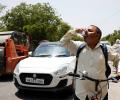
The Met department blamed the malfunctioning of sensors kept at the Automated Weather Station for the gaffe.

Six weather stations across Delhi recorded over 100 mm of rain in a single day, the India meteorological department (IMD) said on Thursday, categorising it as an "extremely intense spell".

Passenger vehicle retail sales in India witnessed a 7 per cent on-year decline in June as severe heatwave conditions resulted in 15 per cent less showroom walk-ins, industry body FADA said on Friday. Overall passenger vehicle registrations stood at 2,81,566 units last month, as compared to 3,02,000 units in June 2023. "Despite improved product availability and substantial discounts aimed at stimulating demand, market sentiment remains subdued due to extreme heat resulting in 15 per cent less walk-ins and delayed monsoons," the Federation of Automobile Dealers Associations (FADA) president Manish Raj Singhania said in a statement.

As many as 720 roads, including four national highways, in Himachal Pradesh are blocked following snow while 2,243 transformers are disrupted.

Seven out of eight women street vendors reported experiencing high blood pressure, while women in the middle age group raised concerns about delays in their menstrual cycles due to the extreme heat.

Apart from the human body, human food will bear direct repercussions. From staples such as wheat, to coffee, dairy, and even the great Hilsa face the threat of reduced supply due to the extreme heat.

Addressing a press conference virtually, India Meteorological Department Director General Mrutyunjay Mohapatra said September was likely to witness normal rainfall in the range of 91-109 per cent of the long period average of 167.9 mm.

"This year, the Southwest Monsoon is likely to set over Kerala on May 31 with a model error of four days," the India meteorological department said on Wednesday.

The Federation of Automobile Dealers Associations (Fada) has raised concerns over the rising inventory levels of four-wheelers at dealerships which have now reached a 60-day stockpile or around 550,000 units. This situation could mean a significant financial burden on dealerships due to the additional interest cost for the extended holding period. These 60-day inventory levels are nearing the 2018-19 levels when inventory days had approached 70 days, leading to the closure of around 282 passenger vehicle dealerships.

The India meteorological department said another western disturbance is likely to bring storms and rain to the northern plains, including Delhi, over the next few days.
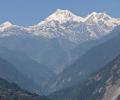
Melting of Himalayan glaciers has doubled since the start of the 21st century due to rising temperatures, losing over a vertical foot and half of ice each year and potentially threatening water supply for hundreds of millions of people in countries, including India, according to a study published in 2019.
